Player 2: when it took two to play
The second controller, the rivalry at the arcade, the shared sofa. Before online play existed, playing with others meant being in the same room.
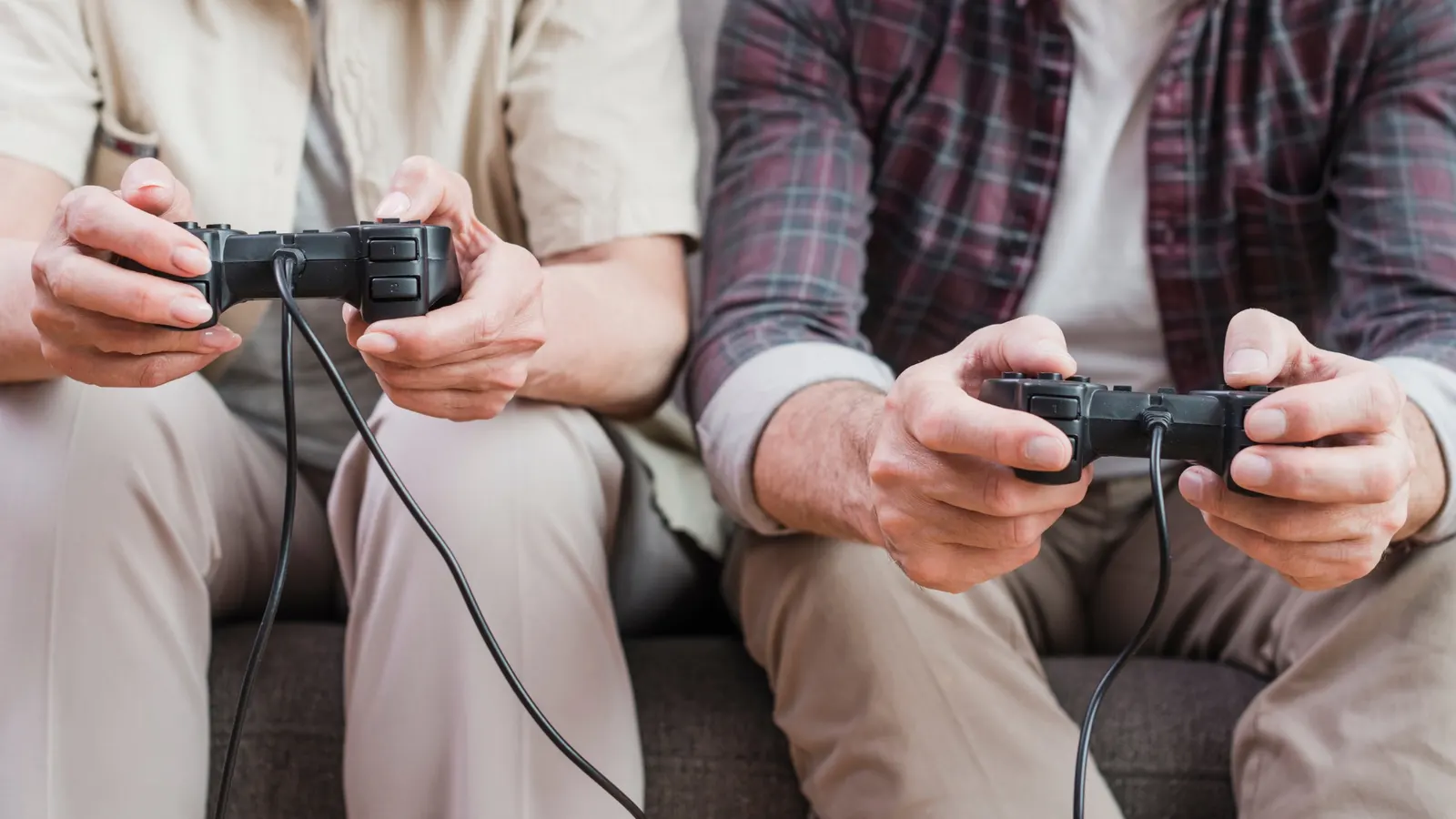
We all had a player 2. The little brother you handed the controller that didn’t quite work, the cousin who only came round in summer, the friend from your block who turned up with his cartridge under his arm. Sometimes player 2 was you, waiting your turn with itchy fingers.
Before online play existed, playing with others meant being in the same room. Sharing the screen, the sofa and the after-school snacks. Falling out over who got to pick their character first, and making up two games later.
The bad controller
Anyone who grew up sharing a console with siblings knows the rule: the good controller belongs to whoever owns the console. The other one, with the dodgy D-pad or the tangled cable, was for the guest. And even so, the guest came back every afternoon.
Because the controller wasn’t the point. It was the “let me have a go”, the “it’s my turn now”, the shout when someone fell off a cliff and dragged the other one down with them. Playing two-player was a way of being together.
Before the sofa, the arcade
Video games were born for two. In 1958, at Brookhaven National Laboratory in New York State, William Higinbotham put together Tennis for Two: an oscilloscope, two controllers and a ball bouncing from side to side. Fourteen years later, Pong took that same idea into bars.
In the arcades, player 2 could be anyone. All it took was a coin in the slot next to yours. In 1985 Atari Games’ Gauntlet let four people play at once on the same machine, something nobody had done before. And in 1987 Technōs’ Double Dragon had two brothers dishing out punches side by side… only to make them fight each other at the end if two people were playing.
Then came Street Fighter II, in 1991, and with it a ritual many still remember: resting your coin on the edge of the screen to call next game. Whoever won stayed on the machine. Whoever lost went back to the end of the queue.
Four controllers
Home consoles took a while to catch up. Four-player games needed adapters, multitaps and a lot of cable. Codemasters came up with an almost magical fix for Micro Machines 2 (1994) on the Mega Drive: a cartridge with two extra controller ports built in, so four friends could race at once without buying anything else.
The Nintendo 64 solved it out of the box, with four controller ports on the front. Mario Kart 64 and GoldenEye 007 turned split screen into an event: four friends, one telly and a strict ban on looking at anyone else’s bit of the screen.
Why we still look for someone to play with
Today you can play with anyone in the world without leaving home. And yet couch multiplayer keeps coming back. Retro associations fill clubhouses and fairs with people who want to play next to other people. Restored arcade cabinets always have someone waiting for a turn.
Maybe because playing together was never just about playing. It was sharing some time, a screen and a story you’d go on telling for years. That’s the idea behind this edition: retro is also the people we play it with.
Sources